


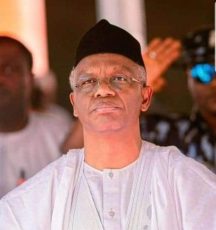
The Supreme Council for Sharia in Nigeria, SCSN, has called on relevant authorities to review the continued detention of former Kaduna State Governor, Nasir El-Rufai, warning that actions perceived as arbitrary or politically motivated could undermine public confidence in Nigeria’s democratic institutions.
The council, in a statement on Tuesday by its Secretary-General, Nafi’u Baba-Ahmad, urged the authorities to ensure that due process was followed in the handling of El-Rufai’s case.
The SCSN said it remained committed to justice, fairness and the rule of law, stressing that every Nigerian, irrespective of status, political affiliation or personal disposition, was entitled to fundamental rights and presumed innocent until proven guilty by a competent court.
The statement was titled, “Urgent Call for Adherence to Rule of Law in the Continued Detention of Mallam Nasir El-Rufa’i.”
The council said, “The Supreme Council for Sharia in Nigeria firmly believes that strict adherence to the rule of law is sacrosanct and must apply equally to all citizens, irrespective of status, political affiliation, or personal disposition.”
It added that while it did not support or condone criminality in any form, the pursuit of justice must itself be just and consistent with established legal procedures and constitutional safeguards.
The council expressed concern over the circumstances surrounding El-Rufai’s continued detention and what it described as the apparent difficulty in meeting his bail conditions.
READ ALSO: Disappearing into Nigeria’s security architecture: Who accounts for South East detainees?
It said, “Like every Nigerian, Malam Nasir El-Rufai is entitled to his fundamental rights and is presumed innocent until proven guilty by a court of competent jurisdiction.”
The SCSN urged the relevant authorities to operate strictly within the confines of the Constitution and extant laws, ensuring that due process was observed at every stage.
It further called on all stakeholders to exercise restraint and responsibility, warning against actions that could be perceived as politically motivated persecution.
According to the council, Nigeria’s unity and long-term stability were closely tied to the credibility of its institutions and the trust reposed in them by citizens.
“Justice must not only be done but must be manifestly seen to be done,” it stated, stressing that consistent, impartial and lawful application of justice remained a strong safeguard for national cohesion and sustainable development.
The council also appealed to the authorities to refrain from actions that could erode public confidence in state institutions and weaken the foundations of democratic governance.
It reiterated its commitment to advocating justice, protecting the rights of citizens and fostering peaceful coexistence across the country.