


By Okechukwu Nwanguma
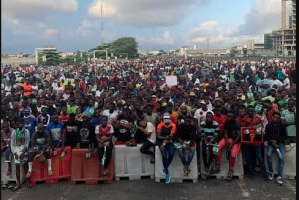
Six years ago, young Nigerians took to the streets to protest police brutality, torture, extortion, arbitrary arrest, enforced disappearance and extrajudicial killing. What began as a demand to disband the notorious Special Anti-Robbery Squad became a nationwide rejection of abusive policing and official impunity.
#EndSARS was never simply about the name or conduct of one police unit. It was a demand to reform a system in which police officers could violate citizens’ rights without meaningful consequences.
SARS was eventually disbanded. Governments acknowledged the protesters’ five demands, established judicial panels of inquiry and announced measures intended to reform the police. Some victims received compensation, and the panels recommended prosecutions, disciplinary action and institutional changes.
Yet six years later, the fundamental question remains unanswered: has policing in Nigeria become more lawful, professional, humane and accountable?
The evidence suggests that the gap between official promises and everyday police conduct remains dangerously wide.
A Crisis Long Foretold
The October 2020 uprising did not emerge from nowhere. It followed years of warnings from victims, lawyers, journalists and civil society organisations.
Before establishing the Rule of Law and Accountability Advocacy Centre, I served as National Coordinator of the Network on Police Reform in Nigeria and previously headed the Police Research Project of the Civil Liberties Organisation. Through these platforms, we documented abuses, supported victims, submitted petitions, pursued litigation and repeatedly engaged police authorities and oversight institutions.
Successive Inspectors-General of Police announced restrictions, restructuring and reforms of SARS. On 4 October 2020, shortly before the protests gathered momentum, the then Inspector-General of Police, Mohammed Adamu, announced yet another restriction on SARS and other tactical units, including prohibitions on routine patrols, stop-and-search duties and roadblocks.
But Nigerians had heard such promises before. Directives were repeatedly issued without transparent investigations, effective supervision or meaningful consequences for officers who violated them.
Reports surrounding an alleged SARS-related incident in Ughelli, Delta State, helped trigger the protests. But the movement spread because millions of young Nigerians recognised themselves in the experiences being shared.
Many had been profiled because of their hairstyles, clothing, mobile phones, laptops, vehicles or perceived lifestyles. They had endured unlawful searches, arbitrary detention, intimidation, torture and demands for money.
When legitimate complaints are repeatedly ignored and established accountability institutions fail, the streets can become the avenue of last resort. That is one of the enduring lessons of #EndSARS.
Changing a Name Is Not Institutional Reform
The government has never provided a sufficiently transparent account of what happened to former SARS personnel.
How many were investigated? How many underwent psychological assessment and retraining? How many were disciplined, dismissed or prosecuted? Where were they redeployed? Were officers implicated in serious abuses permitted to continue serving in other formations?
READ ALSO: Alleged $6.23m fraud : EFCC opposes Emefiele’s No-Case submission
These questions matter because redeployment is not accountability. Changing the name of a police unit does not change an abusive institutional culture.
Six years after #EndSARS, allegations of torture, extortion, unlawful detention, extrajudicial killing and enforced disappearance continue to emerge from conventional police formations and specialised tactical units.
Nigeria already has important legal safeguards in the Police Act 2020, the Anti-Torture Act 2017, the Administration of Criminal Justice Act 2015 and corresponding state laws. The problem is not merely the absence of legislation. It is the failure to implement and enforce existing laws.
RULAAC’s continuing monitoring has identified recurring patterns of arrest before investigation, detention over civil disputes, denial of access to lawyers and relatives, coercive interrogation, torture, arrest of relatives in place of suspects and demands for unlawful payments before bail or release.
Weak custody records, inadequate medical screening, restricted access to legal assistance and the absence of credible independent monitoring make abuses easier to commit and harder to prove.
The consequences do not end when a detainee is released. Survivors may live for years with physical injuries, psychological trauma, lost livelihoods, damaged family relationships and a profound loss of trust in public institutions.
When Winning in Court Still Does Not Deliver Justice
The experience of Ngozichukwu demonstrates how police impunity can survive even after a victim has obtained judicial vindication.
She has recounted being abducted, transported overnight to Abuja and severely tortured at a facility associated with the Intelligence Response Team formerly led by Abba Kyari.
She describes fractured wrists, deep cuts, starvation, denial of medical treatment and prolonged detention in degrading conditions. She states that she was targeted because she contributed a small amount of money towards the treatment of persons injured during the #EndSARS period in the Southeast.
Ngozichukwu subsequently instituted a fundamental-rights enforcement action against the police. She won the case, and the court awarded her compensation for the violations she suffered.
Yet the police have neither complied with the judgment nor paid the compensation.
What more must a victim do?
She survived the alleged torture, overcame the obstacles to seeking legal redress and obtained a favourable judgment. But the institution constitutionally charged with enforcing the law has failed to obey the court.
Compliance with judicial decisions is not optional. When the police refuse or neglect to obey a valid judgment, they undermine the authority of the courts, deny victims an effective remedy and reinforce the same culture of impunity that police reform is supposed to dismantle.
Tiger Base and the Persistence of Abusive Tactical Policing
Continuing allegations against specialised formations such as Tiger Base in Owerri raise further questions about whether the lessons of #EndSARS have been learned.
RULAAC has documented complaints involving alleged torture, extortion, unlawful detention, enforced disappearance and deaths connected with police custody in Imo State.
READ ALSO: Oborevwori pays condolence visit to Uduaghan’s family
The recent coroner’s findings concerning the death of Japheth Njoku are particularly significant. In findings issued on 30 September 2026, the coroner identified serious misconduct associated with his detention at Tiger Base, including torture, overcrowding, extortion and denial of bail. Accountability measures were recommended against implicated personnel.
The value of a judicial finding lies ultimately in its implementation. Prosecutorial and disciplinary authorities must act promptly, investigate further where necessary and prosecute or discipline implicated personnel where the evidence warrants it.
No tactical formation should operate as a law unto itself.
Families Still Searching for the Missing
The unresolved crisis extends beyond police stations and tactical formations.
Across the Southeast and elsewhere in Nigeria, families continue to search for relatives allegedly arrested by security personnel and subsequently detained incommunicado or disappeared.
The Southeast Human Rights Bureau, for which RULAAC provides secretariat support, has documented accounts of people allegedly arrested, transferred to distant detention facilities and denied access to their families and lawyers.
Some families say that security agencies denied holding their relatives despite information suggesting that the missing persons had been taken into custody. Others do not know whether their loved ones remain alive.
No family should have to search indefinitely through police stations, military facilities, detention centres and mortuaries for a relative taken away by state agents.
Every arrest and transfer must be properly documented. Families and lawyers must be notified promptly. Nigeria needs a central electronic custody register, independent access to detention facilities, functional CCTV systems and audiovisual recording of interrogations. Allegations of enforced disappearance and deaths in custody must be investigated independently.
Accountability Cannot Depend on Publicity
Nigeria has institutions responsible for police accountability: the internal mechanisms of the Nigeria Police Force, the Police Service Commission, the National Human Rights Commission and the courts.
Yet these institutions have not developed into a coherent and effective accountability system.
Complaints are sometimes ignored, delayed or referred to formations whose personnel are themselves implicated. Victims receive little information about investigative outcomes. Disciplinary decisions are rarely published, and favourable court judgments may remain unenforced.
Occasionally, police authorities act after an incident attracts national attention on social media. But justice cannot depend on whether a victim is prominent, has influential supporters or can generate public outrage.
READ ALSO: Ebonyi 2027: Peoples Summit endorses PDP gov’ship candidate, Odii
A credible accountability system must protect the poor, unknown and powerless as effectively as it protects those who can command national attention.
Police Welfare and Accountability Are Not Opposites
Serious police reform must also address the difficult conditions under which officers work.
Many officers face poor remuneration and accommodation, inadequate equipment, occupational hazards, limited insurance coverage and uncertain retirement benefits. Excessive working hours, exposure to traumatic events and inadequate psychological support also undermine morale and professionalism.
Police officers deserve dignity, fair treatment and decent working conditions. But poor welfare cannot excuse torture, extortion, unlawful detention or extrajudicial killing.
Welfare and accountability must advance together. Nigeria must improve salaries, housing, healthcare, insurance, pensions, training, operational funding and psychosocial support while strengthening supervision, financial transparency and discipline.
Professional policing requires both properly supported officers and firm consequences for misconduct.
Six Years of Promises Are Enough
The government must now move beyond commemorative statements and reform slogans.
Outstanding reports of the #EndSARS judicial panels should be published and their recommendations implemented. The government should disclose what disciplinary and prosecutorial action followed the panels’ findings.
Allegations of torture, enforced disappearance, extrajudicial killing and death in custody must be investigated promptly and independently. Tactical formations should undergo transparent reviews of their mandates, detention practices, command structures and complaint records.
Victims must receive compensation, medical care, psychosocial support and protection from reprisals. Most importantly, the police and other security agencies must obey judgments obtained by victims, including the judgment awarding compensation to Ngozichukwu.
The events at the Lekki Toll Gate on 20 October 2020 remain a defining symbol of the breakdown of trust between citizens and the state. Unresolved questions about the use of force against protesters, responsibility for violations and accountability continue to cast a shadow over the government’s response.
Nigeria owes victims and their families more than annual remembrance. It owes them truth, justice, effective remedies and guarantees that these violations will not recur.
The Standard by Which Reform Must Be Judged
The success of police reform cannot be measured by the number of committees established, directives issued, officers redeployed or public-relations campaigns launched.
It must be measured by whether citizens are safer; whether police officers obey the law; whether detainees have access to lawyers and relatives; whether court judgments are respected; whether victims obtain justice; whether perpetrators face consequences; and whether families of the missing receive answers.
The courage of the young Nigerians who participated in #EndSARS should be remembered as a powerful assertion of citizenship, constitutional rights and democratic accountability. Peaceful protesters must never be treated as enemies of the state.
The names of police units may have changed and official promises may have multiplied, but the fundamental demand remains unchanged:
End police brutality. End impunity. Deliver justice. Reform the police.
Six years after #EndSARS, accountability must no longer remain a promise. It must become the everyday practice of policing in Nigeria.
*Okechukwu Nwanguma is the Executive Director of the Rule of Law and Accountability Advocacy Centre (RULAAC).