


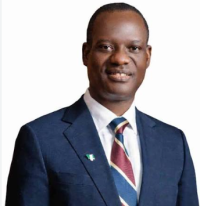
A renowned economist and former International Monetary Fund (IMF) and World Bank expert, Dr. Ifediora Amobi, has described the economic policy expertise of the Minister of Finance and Coordinating Minister of the Economy, Taiwo Oyedele, as a national blessing, urging the Federal Government to sustain reforms while ensuring that their benefits reach ordinary Nigerians.
Amobi, a former adviser during the administration of the late President Umaru Musa Yar’Adua and former Howard University professor of economics, said Oyedele’s appointment reflected President Bola Tinubu’s ability to identify and deploy professionals with the technical knowledge required to manage Nigeria’s economic challenges.
He particularly commended Oyedele’s presentation of the Federal Government’s economic reform scorecard, which outlined the fiscal gains, costs and potential economic damage the reforms were intended to prevent.
“The reforms were necessary to reposition the Nigerian economy, but the immediate impact on households and businesses cannot be ignored. What is important now is to sustain the reforms while implementing measures that will provide relief and stimulate economic activity,” Amobi said.
The economist also praised Oyedele’s contribution to the government’s tax reform programme, noting that improved revenue mobilisation, the closure of fiscal loopholes and stronger accountability were essential to building a more resilient economy.
He urged the minister to focus on long-term revenue growth, plugging fiscal leakages and creating incentives for private-sector investment.
According to Amobi, the ultimate test of the reforms is whether increased government revenue translates into better infrastructure, employment opportunities, improved social services and a more competitive business environment.
He also called for targeted measures to protect vulnerable Nigerians from the effects of rising living costs, stressing that macroeconomic improvements must be accompanied by tangible benefits for citizens.
Oyedele’s credentials provide a basis for the confidence expressed in his leadership.
Before his appointment to the cabinet, he spent 22 years at PricewaterhouseCoopers (PwC), rising to become fiscal policy partner and Africa tax leader. His experience covered taxation, fiscal policy, business strategy and policy design.
He holds a Higher National Diploma in accountancy and finance from Yaba College of Technology and a degree in applied accounting from Oxford Brookes University. He also attended executive education programmes at the London School of Economics, Yale University and Harvard Kennedy School.
Before becoming minister, Oyedele chaired the Presidential Committee on Fiscal Policy and Tax Reforms, which developed proposals to simplify taxation, reduce multiple taxation and improve revenue collection. Four tax reform laws were signed in 2025.
His role in the government’s broader economic programme has also involved explaining the fiscal implications of petrol subsidy removal and foreign exchange reforms.
In August 2026, Oyedele said the reforms had helped avert a deeper economic crisis by improving public finances and strengthening external stability.
Reuters reported that investors and international lenders had welcomed aspects of the reforms, although Nigerians continued to face significant cost-of-living pressures.
Amobi’s endorsement highlights the importance of technical competence in economic management, while placing responsibility on the government to translate fiscal gains i
nto improved living standards.