


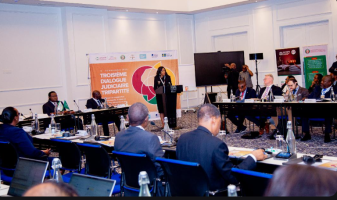
The ECOWAS Community Court of Justice, the African Court on Human and Peoples’ Rights and the East African Court of Justice have stepped up efforts to strengthen judicial cooperation, improve compliance with court decisions and expand access to justice across Africa.
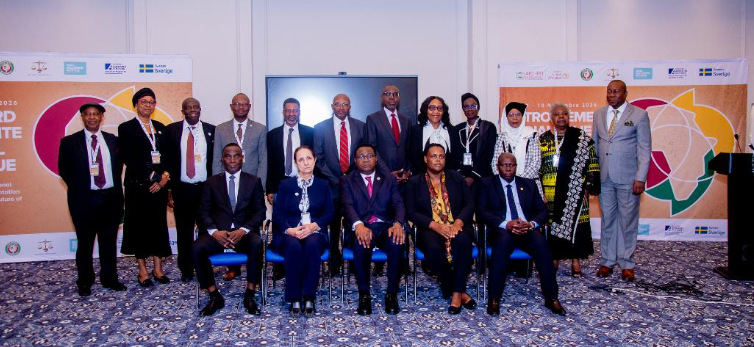
The three regional courts are meeting in Arusha, Tanzania, for the Third Tripartite Judicial Dialogue, which began on Monday, November 9, and ends Tuesday, November 10, 2026.
The meeting is holding under the theme, “Strengthening Institutional Cooperation, Implementation of Decisions and the Future of AJUDATA in Africa.”
A major focus of the two-day dialogue is how to address the persistent failure to implement judicial decisions, inadequate institutional resources and weak coordination among African judicial institutions.
The discussions are also expected to chart a common path towards strengthening human rights protection, the rule of law, regional integration and access to justice across the continent.
AJUDATA takes centre stage
One of the key issues before participants is the development of the African Jurisprudence Database, AJUDATA, a continental initiative designed to improve access to African international jurisprudence, legal resources and institutional information.
The proposed platform is expected to make it easier for judges, lawyers, researchers and other legal practitioners to access judicial decisions and relevant legal materials from African regional courts.
It is also expected to support legal research, facilitate the monitoring of court decisions and promote greater consistency in the development of African jurisprudence.
The initiative is particularly significant as the three courts seek to improve the exchange of judicial decisions, legal principles and best practices across their respective jurisdictions.
Poor implementation of court decisions remains a challenge
The latest dialogue builds on the outcome of the Second Tripartite Judicial Dialogue, held in Arusha in September 2024.
READ ALSO: Murder investigation: Family urges police authority not to compromise probe
At that meeting, participants identified inadequate human, technical and financial resources, low levels of implementation of judicial decisions and gaps in institutional coordination as some of the major challenges confronting the courts.
The Third Dialogue is providing an opportunity for judges, registry officials and representatives of partner institutions to assess progress made on commitments reached at the previous meeting.
These include improving the exchange of jurisprudence and judicial practices, strengthening the implementation and monitoring of court decisions, and promoting joint research, public awareness and capacity-building programmes.
Participants are also expected to identify practical measures to address the challenges and make judicial cooperation more effective.
Climate justice, environmental rights on agenda
Beyond institutional cooperation and enforcement of judicial decisions, the meeting is also examining opportunities for collaboration in emerging areas of jurisprudence, particularly environmental rights and climate justice.
The discussions are expected to explore how the three courts can exchange knowledge and legal experience in addressing environmental and climate-related challenges through regional and international judicial mechanisms.
At the end of the meeting, participants are expected to issue recommendations on strengthening cooperation, improving mechanisms for implementing and following up judicial decisions, and providing strategic direction for the governance and long-term sustainability of AJUDATA.
The dialogue will also identify areas for future technical cooperation and joint initiatives.
The participation of the ECOWAS Court underscores its commitment to strengthening partnerships with other African judicial institutions, facilitating the exchange of jurisprudence and promoting a more accessible, coordinated and effective regional and continental justice system.
The Third Tripartite Judicial Dialogue is being organised with the support of the Raoul Wallenberg Institute and its partners.
