


The Federal Government has called on Nigeria’s banking and financial services industry to direct more capital towards productive enterprises, infrastructure and job creation, as the country advances from macroeconomic stability to inclusive prosperity.
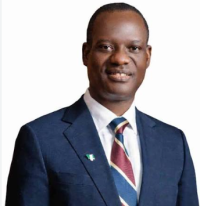
President Bola Tinubu made the call in a keynote address delivered on his behalf by the Minister of Finance and Coordinating Minister of the Economy, Taiwo Oyedele, at the 19th Annual Banking and Finance Conference of the Chartered Institute of Bankers of Nigeria, CIBN, held on Tuesday in Abuja.
Speaking on the theme, “Building a Resilient Economy in an Era of Disruptions: Strategic Imperatives for the Banking and Financial Services Industry,” the President stated that resilience must go beyond surviving economic shocks to strengthening the country’s capacity to adapt, remain productive and emerge stronger.
He noted that the administration’s reforms over the past three years have addressed longstanding distortions in the foreign exchange market and public finances, while strengthening revenue mobilisation, transparency and fiscal buffers.
The President highlighted the growing impact of the reforms, including economic growth of 4.43 percent in the second quarter of 2026, headline inflation of 15.43 percent and external reserves exceeding $54 billion—the highest level in 18 years.
He also cited improvements in the foreign exchange market, the clearance of more than $7 billion in outstanding foreign exchange forwards, Nigeria’s removal from the Financial Action Task Force grey list and the improving outlook for investment and capital-market activity.
READ ALSO: A’Court affirms ex-NEXIM Bank MD, Orya’s 490 years jail term for N2.4b fraud
He, however, stressed that these gains must translate into tangible improvements in the lives of Nigerians.
“Stability is the foundation; prosperity is the destination. The current phase of our reform journey is accelerating the conversion of stability into investment, investment into production, production into jobs, and growth into improved living standards,” the President said.
He identified five priorities for building a resilient financial system: facilitating economic growth, expanding access to finance, responsibly deploying technology, mobilising long-term capital and strengthening trust across the financial sector.
The President urged banks to ensure that the recently concluded recapitalisation exercise results not only in larger balance sheets, but also in increased financing for Nigerian businesses, particularly manufacturers, exporters and Micro, Small and Medium Enterprises.
He explained that genuine financial inclusion must extend beyond access to bank accounts and enable market women, young entrepreneurs and other productive Nigerians to obtain affordable working capital and financing based on viable business opportunities.
On technology, the President said Nigeria’s financial sector must help shape developments in artificial intelligence, open banking, digital identity and instant payments, while placing greater emphasis on cybersecurity, data protection and fraud prevention.
He also called for deeper capital markets and stronger insurance, pension and asset-management industries to mobilise patient capital for infrastructure, housing, energy and industrial development.
READ ALSO: TROUBLE BREWING IN LAGOS CIVIL SERVICE OVER PROPOSED MAGISTRATES’ COURT LAW AMENDMENT
The President reaffirmed the government’s commitment to expanding guarantees, risk-sharing arrangements, blended finance and credit-enhancement mechanisms, with the National Credit Guarantee Company playing a central role in de-risking productive investment and attracting private capital.
He added that improved fiscal discipline would progressively reduce government’s financing pressure, create more room for private-sector credit and support the conditions for lower inflation, affordable interest rates, increased production and job creation.
The Federal Government further urged financial institutions to view Nigerian businesses as potential regional champions capable of leveraging the African Continental Free Trade Area and its market of more than 1.4 billion people.
The President assured that the administration would sustain reforms aimed at strengthening macroeconomic stability and investor confidence, while regulators continue to safeguard the financial system and enable responsible innovation.
He maintained that the next phase of Nigeria’s development must be defined not merely by bigger financial institutions, but by a larger and more productive economy in which capital reaches viable ideas, finance enables enterprise, technology expands opportunities and economic growth delivers better living standards for Nigerians.