


PROFESSOR MATTHEW CHUKS OKPALUBA: A LEGACY OF LEGAL SCHOLARSHIP, INTELLECTUAL EXCELLENCE
A Tribute to a Distinguished Nigerian Legal Scholar
By C.Umeokafor LL.B, B.L, LLM
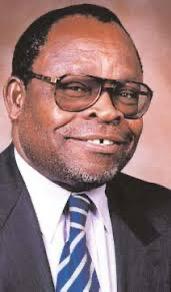
The passing of Professor Matthew Chuks Okpaluba marks the end of an extraordinary intellectual journey and the loss of a distinguished scholar whose contribution to legal education, jurisprudence and academic thought extended far beyond the shores of Nigeria.
There are scholars whose names become attached to institutions, books and academic titles. There are others whose influence is more enduring because their scholarship becomes part of the intellectual foundation upon which succeeding generations build. Professor Matthew Chuks Okpaluba belonged to the latter category.
His was a life devoted to the law, not merely as a collection of rules and precedents, but as an intellectual discipline, a social institution and an instrument through which justice, liberty, accountability and human dignity may be pursued.
For those of us who knew him as family, however, Professor Okpaluba was more than the distinguished academic whose name appeared on the covers of scholarly publications. He was our uncle, a member of our family whose remarkable intellectual accomplishments were a source of immense pride and whose passing leaves a deeply personal void.
THE MAKING OF A SCHOLAR
Professor Okpaluba’s academic journey was one of remarkable breadth. He studied at the University of London, the University of Toronto and the University of the West Indies, obtaining his LL.B. (Hons) from the University of London in 1968, LL.M. in 1969, and Ph.D. from the University of the West Indies in 1980. His doctoral thesis, Compulsory Labour Adjudication in Trinidad & Tobago: The Jurisprudence of the Industrial Court, was already indicative of the depth and direction of his intellectual interests.

His principal areas of teaching and research included constitutional law, administrative law, labour law, human rights and humanitarian law, and social security law and jurisprudence. These areas were particularly significant because they lie at the heart of the relationship between the individual, institutions and the State.
Constitutional law interrogates the nature and limits of governmental power. Administrative law asks whether that power has been exercised lawfully, fairly and rationally.
Labour law examines the legal relationship between employer and employee, particularly in circumstances where economic power may be unequal. Human-rights law places the dignity and liberty of the individual at the centre of the legal order.
It was within these intellectually demanding fields that Professor Okpaluba made his contribution.
A SCHOLAR WHOSE WORK CROSSED BORDERS
Professor Okpaluba’s academic career was distinctly international. He served as Professor of Jurisprudence and Director of the School of Law at the University of Limpopo and later as Professor of Law at the National University of Lesotho. His academic association with the University of the Free State’s Centre for Human Rights further reflected his continuing engagement with legal scholarship and human-rights discourse.
His career consequently became part of a wider African and Commonwealth intellectual tradition. The significance of this cannot be overstated. Law may operate within territorial jurisdictions, but jurisprudence is capable of crossing borders. Principles of natural justice, constitutionalism, administrative fairness, judicial impartiality, labour rights and human dignity have generated conversations across common-law jurisdictions.
Professor Okpaluba was an active participant in that conversation. His scholarship demonstrated that an African legal scholar could engage confidently with the broader common-law tradition while contributing meaningfully to its continuing development.
THE SCHOLAR AND THE RULE OF LAW
Perhaps one of the clearest windows into Professor Okpaluba’s intellectual method can be found in his scholarship concerning judicial recusal. In 2022, he co-authored with Tumo Charles Maloka the article, “The Fundamental Principles of Recusal of a Judge at Common Law: Recent Developments,” published in Obiter, Volume 43, Issue 2.

The subject is deceptively simple but constitutionally profound. At its foundation lies the ancient common-law principle that no person should be a judge in his or her own cause. From that principle developed the wider rule against actual or apparent bias and the requirement that adjudication be conducted by an impartial decision-maker.
Professor Okpaluba’s analysis examined the presumption of judicial impartiality and the circumstances in which that presumption may be displaced. The article also considered the reasonable-observer approach to determining whether circumstances create a reasonable apprehension of bias.
The subject was particularly appropriate for a scholar concerned with the integrity of legal institutions. The administration of justice depends not only upon the existence of courts but also upon public confidence in their impartiality.
A court must therefore inspire confidence that its decision is the product of law and reason rather than personal interest, prejudice or extraneous influence. In that sense, Professor Okpaluba’s scholarship on recusal was ultimately scholarship about something larger than recusal itself: the integrity of the judicial process and the rule of law.
A SCHOLAR CONCERNED WITH THE INDIVIDUAL AND THE STATE
Another recurring feature of Professor Okpaluba’s scholarship was his engagement with the protection of individuals against abuses of institutional power. His academic interests in administrative law, human rights, labour law and social security were not disconnected areas of study. They intersected around questions concerning power, accountability, fairness and the protection of the individual.
His work on unlawful arrest and detention, for example, examined the legal consequences of unlawful deprivation of liberty and the assessment of damages arising from such conduct.
The underlying principle is fundamental to constitutional democracy. The State possesses powers that individuals do not possess. It can arrest, detain, regulate and exercise coercive authority. But the exercise of such power must remain subject to law.
The rule of law demands that power be exercised within legal limits and that unlawful exercises of power attract appropriate remedies. Professor Okpaluba’s scholarship repeatedly engaged with these deeper questions of legality and accountability.
LABOUR LAW, SOCIAL SECURITY AND JUSTICE
His scholarly engagement with labour law and social-security jurisprudence deserves particular recognition. Labour law is concerned not merely with contracts of employment. It also engages questions of dignity, economic justice, workplace rights and the protection of persons who may occupy weaker bargaining positions.
Social-security law similarly confronts one of the most important questions in any modern society: the extent to which the legal and institutional order should protect persons facing poverty, unemployment, disability, old age and other forms of vulnerability. Professor Okpaluba’s doctoral work on compulsory labour adjudication was an early expression of these interests. His subsequent scholarship continued to engage with labour and social-protection questions.
His influence also extended into postgraduate scholarship. Professor Clarence Itumeleng Tshoose’s Doctor of Laws thesis at the University of South Africa, dealing with legal reforms to improve social assistance and the quality of life of poor people in South Africa, lists Professor Okpaluba as its supervisor.
That aspect of his career is important. A professor’s legacy is not contained solely in his publications. It is also found in the scholars he teaches, supervises and inspires.
THE TEACHER AND MENTOR
The true measure of an academic is therefore not always found in the number of articles he publishes or the titles attached to his name. It is found in the minds he helps to develop.
Legal education is not simply the memorisation of statutes and cases. It requires disciplined reasoning—the ability to distinguish principle from assertion, authority from opinion, ratio from obiter and sound argument from rhetoric.
A great law teacher teaches students not merely what the law is, but how to think about the law. That is one of the most valuable forms of intellectual inheritance. Professor Okpaluba’s record of postgraduate supervision demonstrates that his influence extended beyond his own writings. His students became researchers and scholars in their own right, carrying elements of his intellectual discipline into subsequent generations.
In this respect, his academic legacy is necessarily larger than his bibliography.
A SCHOLAR WHO CONTINUED TO ASK QUESTIONS
One of the most admirable features of Professor Okpaluba’s academic life was the persistence of his intellectual curiosity. His 2022 scholarship on judicial recusal demonstrates that his engagement with legal research continued into the later years of his life.
This is perhaps one of the defining characteristics of the true scholar. The scholar remains curious. The law is never entirely settled. New circumstances test old principles. Courts reconsider doctrines. Legislatures create new legal frameworks. Social realities expose gaps in existing rules.
And the scholar continues to ask questions. Professor Okpaluba did precisely that. His intellectual life reminds us that scholarship is not merely a profession. It is a vocation—a continuing commitment to inquiry and the pursuit of knowledge.
THE HUMAN BEING BEHIND THE PROFESSOR
Yet, for his family, Professor Okpaluba’s story cannot end with his academic accomplishments. We knew the man behind the title.
We knew Uncle Matthew. The academic record can tell us where he studied, the degrees he obtained, the institutions in which he taught and the subjects upon which he wrote. It can catalogue his publications and appointments.
But a curriculum vitae cannot capture the warmth of family relationships. It cannot record the conversations that remain in one’s memory. It cannot measure the influence of an accomplished uncle upon younger members of his family.
And it cannot adequately convey the peculiar pride that comes from knowing that someone within one’s own family has attained intellectual distinction on an international stage.
For us, therefore, his passing is not simply the departure of a professor. It is the loss of a relative, an uncle and a member of the family whose life represented the extraordinary possibilities that education, discipline and intellectual curiosity can create.
His achievements were not merely things we read about. They were part of our family story.
A LEGACY THAT TRANSCENDS THE INDIVIDUAL
There is an appropriate jurisprudential analogy for the legacy of a scholar. A judicial precedent survives the judge who pronounced it. Its continuing relevance lies in the fact that subsequent courts may consider it, follow it, distinguish it, criticise it or develop its principles.
Scholarship operates in much the same way. A published argument does not end with its author. It enters the intellectual conversation. It is read. It is questioned. It is cited. It becomes a foundation upon which another scholar may construct a new argument.
In this sense, Professor Okpaluba’s scholarship possesses a life beyond its author. His work on judicial recusal, for example, remains part of the contemporary literature concerning judicial impartiality, natural justice and the integrity of adjudication.
His work in labour law, administrative law, human rights and social-security jurisprudence similarly forms part of broader bodies of scholarship that continue to develop.
The scholar may depart, but the scholarship remains.
A NIGERIAN SCHOLAR WHOSE INTELLECTUAL REACH WAS GLOBAL
Professor Okpaluba’s life also stands as a testament to the capacity of Nigerian scholarship to engage with the world.
His academic journey took him from Nigeria into institutions and intellectual communities across different jurisdictions, while his career in Southern Africa placed his scholarship within a broader African legal context.
He demonstrated that intellectual excellence knows no geographical boundary. He also demonstrated that African scholars need not merely receive jurisprudence produced elsewhere. They can participate in the process of producing, interrogating and refining legal thought.
That is a legacy worthy of remembrance.
CONCLUSION: A LIFE OF THE MIND
Professor Matthew Chuks Okpaluba leaves behind more than academic titles, institutional appointments and publications.
He leaves behind an intellectual legacy. He leaves scholarship that engaged with some of the fundamental questions of the legal order: the limits of public power, the protection of individual liberty, the integrity of adjudication, the regulation of labour, social protection and the relationship between law and justice.
He leaves behind students and scholars whose intellectual journeys were influenced by his teaching and supervision.
He leaves behind a body of work that forms part of the continuing jurisprudential conversation in Africa and the wider Commonwealth legal tradition.
But, perhaps most importantly, he leaves behind an example. An example of intellectual discipline. An example of perseverance. An example of the transformative power of education.
An example of a scholar who remained intellectually curious and committed to the rigorous study of law. There is an old legal instinct to look to precedent.
In remembering Professor Matthew Chuks Okpaluba, we too look to precedent—not a judicial precedent, but a human and intellectual precedent. He showed what a life devoted to learning could become. He showed how scholarship could transcend borders. He showed how ideas could outlive their author.
And for his family, he leaves something even more precious: memories that no publication, however distinguished, can fully capture.
Professor Matthew Chuks Okpaluba has therefore not departed entirely. He remains in the pages of the journals in which he wrote.
He remains in the scholarship of those who continue to engage with his work. He remains in the minds of the students he taught and the scholars he supervised.
He remains in the jurisprudential questions to which he devoted his intellect. And he remains in the hearts and memories of his family.
The law teaches us that precedent survives the judge. Scholarship teaches us that ideas survive the scholar.
Professor Matthew Chuks Okpaluba’s ideas will continue to speak. May his scholarship continue to be read.
May his intellectual legacy continue to inspire. May his memory remain a blessing to his family, his students, his colleagues and the wider legal academy.
And may posterity remember him not merely for the titles he bore, but for the intellectual substance, discipline and humanity with which he lived his life.
Requiescat in pace, Professor Matthew Chuks Okpaluba.