

The Federal Government has launched a N729 billion Series 2 Federal Government Guaranteed Power Sector Bond as part of efforts to restore financial sustainability in Nigeria’s electricity industry, settle outstanding debts, and attract long-term private investment into the sector.
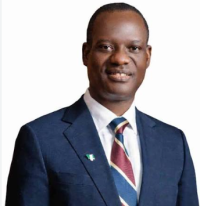
The Minister of Finance and Coordinating Minister of the Economy, Mr. Taiwo Oyedele, announced the bond at an investor forum in Abuja on Tuesday, describing it as a major step in implementing the Presidential Power Sector Debt Reduction Programme.
According to the minister, the bond will be used to clear verified legacy liabilities owed to electricity generation companies (GenCos), gas suppliers, and other service providers, with the aim of improving liquidity across the Nigerian Electricity Supply Industry (NESI) and enhancing the sector’s operational stability.
“The first series proved that government keeps its commitments. Investors reward execution, not promises, and every commitment honoured today lowers the cost of capital tomorrow,” Oyedele said.
The Series 2 issuance follows the successful N501 billion Series 1 bond, which was fully subscribed and has already recorded its first scheduled repayment. The government says the performance of the maiden bond has boosted investor confidence in its ongoing power sector reforms.
Oyedele said settling outstanding obligations would improve power plant availability, strengthen the electricity market, and create a more attractive environment for long-term investment.
READ ALSO: A’Court affirms forfeiture of General Atewe’s assets to FG, dismisses appeal
He stressed that reliable electricity is critical to economic growth, industrialisation, digital transformation, and job creation, noting that sustained national development depends on dependable power infrastructure.
The minister also highlighted broader economic reforms being pursued by the administration of President Bola Ahmed Tinubu, saying the measures are aimed at strengthening fiscal sustainability, improving the investment climate, and restoring macroeconomic stability.
He disclosed that Nigeria’s economy grew by 3.9 percent in the first quarter of 2026, while the economy expanded by 11.2 percent in U.S. dollar terms in 2025, attributing the performance to improving macroeconomic fundamentals and rising investor confidence.
Oyedele acknowledged that government resources alone are insufficient to meet Nigeria’s infrastructure financing needs, emphasizing the importance of mobilising long-term private capital through credible institutions, sound policies, and innovative financing mechanisms.
He urged institutional investors to continue supporting the government’s reform agenda, describing investments in the power sector bond as investments in economic productivity, industrial competitiveness, employment, and shared prosperity.
The Federal Government reiterated its commitment to implementing reforms aimed at strengthening institutions, restoring confidence in the economy, and positioning Nigeria as an attractive destination for domestic and foreign investment.